
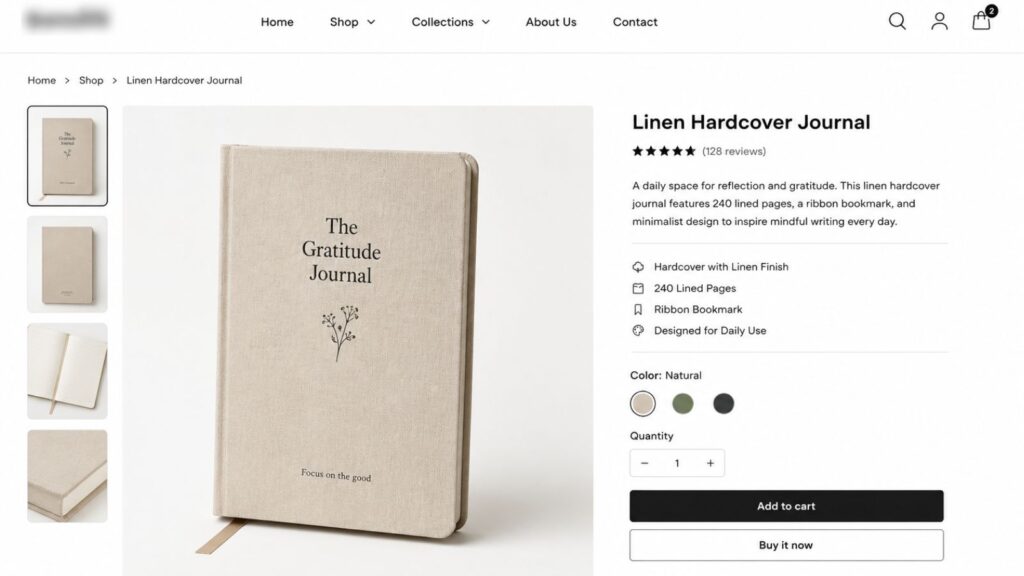
You’ve spent weeks building your product.
You found the right supplier, worked on the packaging, set up your Shopify or WooCommerce store, invested in product photography, and started running ads.
People are finally visiting your website.
Then they leave.
No purchase. No “Add to Cart.” Nothing.
The question is – Does this happen only to you?
No!
If you’ve caught yourself thinking this, somebody else has too.
Most founders immediately think the problem is pricing, competition, or marketing. Sometimes that’s true. But there’s another reason that’s often sitting right in front of you, your product description.
A product description isn’t there to fill empty space on a page. It’s there to answer questions, build trust, reduce hesitation, and help someone picture your product in their life. A good product description can turn curiosity into confidence. And confidence is what leads to sales.
So if you’ve been wondering how to write product descriptions that actually convert, here’s a framework you can use for every product you sell. Whether you’re on Shopify, WooCommerce, or any other ecommerce platform, these principles work because they’re based on how people actually make buying decisions.
Your Product Description Is Your Best Salesperson
Think about shopping in a physical store. You pick up a product and immediately start asking questions. What does it do? Will it solve my problem? Is it worth the money? Can I trust this brand? Is there something better? A salesperson is there to answer those questions.
Online, your product description has to do that job. It only has a few seconds to convince someone to keep reading. If your copy creates confusion, people leave. If it creates clarity, they stay.
The goal isn’t to write more. The goal is to answer the questions your customer already has.
Why Most Product Descriptions Don’t Convert
Most online stores don’t have bad products. They have descriptions that don’t explain why the product matters.
Take this example:
“Premium stainless steel bottle with double-wall insulation. BPA-free. Leakproof lid. 750ml capacity.”
There’s nothing technically wrong with it. But there’s nothing memorable about it either. It tells customers what the product is. But, it fails to tell them why they should care.
People don’t buy features. They buy what those features do for them.
A leakproof bottle means they can throw it into their work bag without worrying about spills. Organic cotton means they stay comfortable all day.
A laptop sleeve means they don’t spend every commute worrying about damaging an expensive laptop.
The feature stays the same. The story changes.
People Buy With Emotion and Justify With Logic
Think about the last thing you bought without planning to. It could have been a pair of shoes, a candle, a skincare product, a coffee mug, or a new watch.
Before you looked at the specifications, you probably imagined how it would fit into your life and how it would make you feel.
That’s how people shop online too. People buy because they want to solve a problem, save time, feel confident, enjoy convenience, or simply make life a little easier.
After making that emotional decision, they look for logical reasons to support it. That’s why a good product description speaks to both emotion and logic.
Start With the “Why”
Before writing a single sentence, ask yourself one question: Why would somebody buy this product?
Not what material it’s made from or how many colours it comes in. Start with the customer’s reason for buying.
Instead of writing this:
- Reusable Stainless Steel Bottle
- Double-wall insulation
- BPA-free
- 750ml capacity
- Leakproof design
Write something like this instead:
Stay hydrated wherever your day takes you. Whether you’re heading to work, the gym, or a weekend trip, this insulated stainless steel bottle keeps your drink cold for hours while the leakproof lid lets you carry it confidently in your backpack.
The product hasn’t changed. The experience has. A good product description helps customers picture themselves using your product.
Features Tell. Benefits Sell.
If there’s one thing to remember, it’s this: Features explain. Benefits persuade.
Features tell customers what your product has. Benefits explain why those features matter.
Let’s look at a few examples.
Fashion:
Feature: 100% Organic Cotton.
Benefit: Soft, breathable fabric that keeps you comfortable from morning to night.
Jewellery:
Feature: 18K Gold-Plated Finish.
Benefit: Adds timeless elegance to everyday outfits without feeling too heavy or flashy.
Skincare:
Feature: Contains Niacinamide and Hyaluronic Acid.
Benefit: Helps brighten dull skin while providing lasting hydration for healthy-looking skin.
Backpack:
Feature: Water-resistant exterior.
Benefit: Keeps your essentials protected even when you’re caught in unexpected rain.
Coffee:
Feature: Single-origin Arabica Beans.
Benefit: Gives you a smoother, richer cup of coffee that makes every morning better.
Every benefit answers one simple question: Why does this matter to me?
If your product description keeps answering that question, you’re writing from your customer’s point of view.
A Simple Exercise Before You Start Writing
Before writing your next product description, grab a notebook. Write down every feature your product has. Then, beside each one, answer one question: Why would my customer care?
For example:
Feature: Waterproof.
Benefit: Use it confidently in any weather.
Feature: Lightweight.
Benefit: Comfortable enough to carry all day.
Feature: Rechargeable Battery.
Benefit: No need to keep buying replacement batteries.
Feature: Handmade.
Benefit: Every piece feels unique and reflects careful craftsmanship.
This simple exercise changes the way you write. Instead of listing specifications, you start showing customers how your product fits into their lives. That’s what makes descriptions more convincing.
Common Mistakes That Reduce Sales
- Writing for Yourself Instead of Your Customer
You know everything about your product. Your customers don’t. Keep your language simple, conversational, and easy to understand. If somebody has to reread your description to understand it, you’ve already lost them.
- Listing Specifications First
Specifications matter. Customers want to know dimensions, materials, ingredients, or capacity. But don’t lead with those details. Start with the value your product brings. Then support it with specifications.
- Copying Manufacturer Descriptions
Manufacturer descriptions are written for hundreds of stores. That’s why they sound generic. Writing your own description helps your brand stand out and gives search engines original content to understand.
- Sounding Robotic
People connect with people. Write the way you would explain your product to a friend. Simple language builds trust much faster than complicated marketing words.
- Leaving Questions Unanswered
Every unanswered question creates hesitation. Think about the questions customers usually ask before buying. Answer those questions within your product description whenever you can. The easier you make the decision, the more likely somebody is to click “Add to Cart.”
A Simple Framework You Can Follow Every Time
Whenever you’re writing a product description, follow this order:
Start with the customer’s problem or goal.
Show how your product fits into their everyday life.
Explain the biggest benefits.
Support those benefits with features and specifications.
Answer common questions.
Finish with a clear reason to buy.
You don’t need clever marketing tricks, complicated language. You just need clarity.
When people understand what your product does, why it matters, and how it makes their lives better, buying becomes an easier decision.
The best product descriptions don’t sound like advertisements. They sound like somebody who understands the customer’s problem and has the right solution.
That’s what builds trust.
And trust is what turns visitors into customers.
Ready to Write Product Descriptions That Actually Sell?
A good product description doesn’t rely on fancy words. It helps customers understand the value of your product, answers their questions, and gives them the confidence to click “Add to Cart.”
If you want to learn how to use AI to write product descriptions, website copy, blogs, emails, and social media content without losing your brand’s voice, the Win With Content workshop is for you.
Date: 25th July, 2026
Time: 4:00 PM – 6:00 PM IST
Online
You’ll learn how to build your own custom AI assistant that creates content based on your business, your audience, and your way of communicating. The result is content that sounds like you while helping you save time.
Reserve your spot here: https://kaveritikmani.com/events/create-content-using-ai/